Title

Try searching by key words, order- or product code or serial number e.g. “CM442” or “Technical information”
Enter at least 2 characters to start the search.

Buffer preparation

Explore measurement points and instrument selection across the buffer preparation process

F T F T T F T LS A Cond A pH T LS コンポーネントA WFI コンポーネントB K - バッファ準備 Komponente A WFI Komponente B K - Pufferherstellung Component A WFI Component B K - Buffer preparation
Component A
Temperature in feedline A
Component B
Temperature in feedline B
Temperature in feedline WFI
WFI supply
Buffer temperature
Maximum tank level
Conductivity
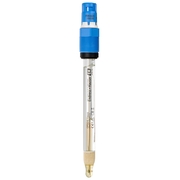
Media pH
Temperature in outlet line
Empty pipe detection
Measuring point Product Alternatives
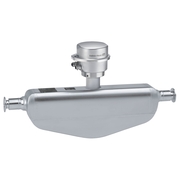
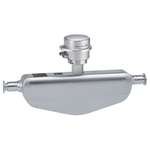
Flow measurement in: Component A

Endress+Hauser offers a suite of analytical instruments ideal for this stage.

Alternatives:

General Requirements:

  • Cleanability (CIP/SIP), no dead legs
  • Fully self-drainable in horizontal installations
  • Design according to ASME BPE standard
  • High reproducibility over a large flow range
  • Small quantities – dosing and batching

Technical requirements:

  • Measuring task: Liquids
  • Process pressure: 0 to 3 bar (0 to 43.5 psi)
  • Process temperature: 5 to 50°C (41 to 120°F)
  • CIP/SIP: 130°C (266°F)
  • Density: 0.8 to 1.25 g/cm³
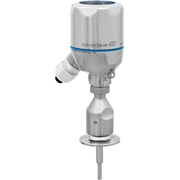
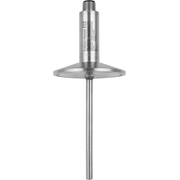
Temperature measurement in: Temperature in feedline A

Endress+Hauser offers a suite of analytical instruments ideal for this stage.

Alternatives:

General Requirements:

  • Cleanability, no dead legs
  • Installation in thermowell
  • High accuracy and repeatability
  • Easy and accurate calibration in closed system
  • Short immersion length for small pipe installation
  • Design according to ASME BPE standard

Technical requirements:

  • Measuring task: Thermometer
  • Process pressure: 0 to 3 bar (0 to 43.5 psi)
  • Process temperature: 5 to 50°C (41 to 120°F)
  • CIP/SIP: 130°C (266°F)
  • Density: 0.8 to 1.25 g/cm³
Flow measurement in: Component B

Endress+Hauser offers a suite of analytical instruments ideal for this stage.

Alternatives:

General Requirements:

  • Cleanability (CIP/SIP), no dead legs
  • Fully self-drainable in horizontal installations
  • Design according to ASME BPE standard
  • High reproducibility over a large flow range
  • Small quantities – dosing and batching

Technical requirements:

  • Measuring task: Liquids
  • Process pressure: 0 to 3 bar (0 to 43.5 psi)
  • Process temperature: 5 to 50°C (41 to 120°F)
  • CIP/SIP: 130°C (266°F)
  • Density: 0.8 to 1.25 g/cm³
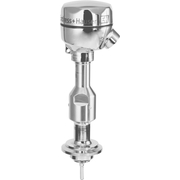
Temperature measurement in: Temperature in feedline B

Endress+Hauser offers a suite of analytical instruments ideal for this stage.

Alternatives:

General Requirements:

  • Cleanability, no dead legs
  • Installation in thermowell
  • High accuracy and repeatability
  • Easy and accurate calibration in closed system
  • Short immersion length for small pipe installation
  • Design according to ASME BPE standard

Technical requirements:

  • Measuring task: Thermometer
  • Process pressure: 0 to 3 bar (0 to 43.5 psi)
  • Process temperature: 5 to 50°C (41 to 120°F)
  • CIP/SIP: 130°C (266°F)
  • Density: 0.8 to 1.25 g/cm³
Temperature measurement in: Temperature in feedline WFI

Endress+Hauser offers a suite of analytical instruments ideal for this stage.

Alternatives:

General Requirements:

  • Cleanability, no dead legs
  • Installation in thermowell
  • High accuracy and repeatability
  • Easy and accurate calibration in closed system
  • Short immersion length for small pipe installation
  • Design according to ASME BPE standard

Technical requirements:

  • Measuring task: Thermometer
  • Process pressure: 0 to 3 bar (0 to 43.5 psi)
  • Process temperature: 5 to 50°C (41 to 120°F)
  • CIP/SIP: 130°C (266°F)
  • Density: 0.8 to 1.25 g/cm³
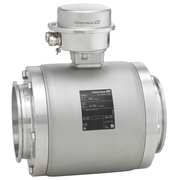
Flow measurement in: WFI supply

Endress+Hauser offers a suite of analytical instruments ideal for this stage.

Alternatives:

General Requirements:

  • Cleanability (CIP/SIP), no dead legs
  • Fully self-drainable in horizontal installations
  • Design according to ASME BPE standard
  • High reproducibility over a large flow range
  • Non-conductive fluid
  • Electropolished

Technical requirements:

  • Measuring task: Liquids
  • Process pressure: 0 to 3 bar (0 to 43.5 psi)
  • Process temperature: 5 to 50°C (41 to 120°F)
  • CIP/SIP: 130°C (266°F)
  • Density: 0.8 to 1.25 g/cm³
Temperature measurement in: Buffer temperature

Endress+Hauser offers a suite of analytical instruments ideal for this stage.

Alternatives:

General Requirements:

  • Cleanability, no dead legs
  • Installation in thermowell
  • High accuracy and repeatability
  • Easy and accurate calibration in closed system
  • Design according to ASME BPE standard

Technical requirements:

  • Measuring task: Thermometer
  • Process pressure: 0 to 3 bar (0 to 43.5 psi)
  • Process temperature: 5 to 50°C (41 to 120°F)
  • CIP/SIP: 130°C (266°F)
  • Density: 0.8 to 1.25 g/cm³
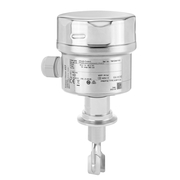
Level measurement in: Maximum tank level

Endress+Hauser offers a suite of analytical instruments ideal for this stage.

Alternatives:

General Requirements:

  • Cleanability, no dead legs, front flush mounting
  • No agitator interference
  • Changing density
  • Design according to ASME BPE standard

Technical requirements:

  • Measuring task: Point Level / Liquids
  • Process pressure: 0 to 3 bar (0 to 43.5 psi)
  • Process temperature: 5 to 50°C (41 to 120°F)
  • CIP/SIP: 130°C (266°F)
  • Density: 0.8 to 1.25 g/cm³
Analysis measurement in: Conductivity

Endress+Hauser offers a suite of analytical instruments ideal for this stage.

Alternatives:

General Requirements:

  • High accuracy
  • Wide measurement range
  • Suitable for CIP/SIP
  • Fast response time
  • Design according to ASME BPE standard

Technical requirements:

  • Measuring task: Conductivity
  • Process pressure: 0 to 3 bar (0 to 43.5 psi)
  • Process temperature: 5 to 50°C (41 to 120°F)
  • CIP/SIP: 130°C (266°F)
  • Density: 0.8 to 1.25 g/cm³
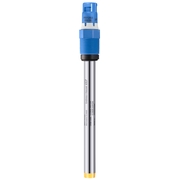
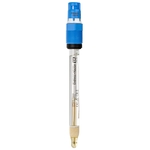
Analysis measurement in: Media pH

Endress+Hauser offers a suite of analytical instruments ideal for this stage.

Alternatives:

General Requirements:

  • Cleanability (CIP/SIP), no dead legs
  • High accuracy
  • Suitable for CIP/SIP and autoclaves
  • Long-term stability
  • Easy and accurate calibration
  • Design according to ASME BPE standard

Technical requirements:

  • Measuring task: pH
  • Process pressure: 0 to 3 bar (0 to 43.5 psi)
  • Process temperature: 5 to 50°C (41 to 120°F)
  • CIP/SIP: 130°C (266°F)
  • Density: 0.8 to 1.25 g/cm³
Temperature measurement in: Temperature in outlet line

Endress+Hauser offers a suite of analytical instruments ideal for this stage.

Alternatives:

General Requirements:

  • Cleanability, no dead legs
  • Installation in thermowell
  • High accuracy and repeatability
  • Easy and accurate calibration in closed system
  • Short immersion length for small pipe installation
  • Design according to ASME BPE standard

Technical requirements:

  • Measuring task: Thermometer
  • Process pressure: 0 to 3 bar (0 to 43.5 psi)
  • Process temperature: 5 to 50°C (41 to 120°F)
  • CIP/SIP: 130°C (266°F)
  • Density: 0.8 to 1.25 g/cm³
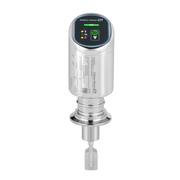
Level measurement in: Empty pipe detection

Endress+Hauser offers a suite of analytical instruments ideal for this stage.

Alternatives:

General Requirements:

  • Cleanability, no dead legs, front flush mounting
  • Small pipe mounting
  • Design according to ASME BPE standard

Technical requirements:

  • Measuring task: Point Level / Liquids
  • Process pressure: 0 to 3 bar (0 to 43.5 psi)
  • Process temperature: 5 to 50°C (41 to 120°F)
  • CIP/SIP: 130°C (266°F)
  • Density: 0.8 to 1.25 g/cm³
Stainless steel processing equipment with large tanks, piping, pumps inside bioprocessing facility. @Lonza

Key instrumentation challenges in the buffer preparation process

Small deviations in buffer composition can directly affect product quality, chromatography performance, cleaning effectiveness, or batch release. Critical factors in buffer operations are pH, conductivity, concentration control, sterility and process consistency. Failures are typically caused by measurement uncertainty, dosing errors, inadequate mixing verification or poor automation control.

  • Accurate pH control: Most buffers are defined primarily by their pH specification. Even small pH deviations can impact downstream processes.
  • Conductivity measurement and concentration verification: Conductivity is often used to verify final buffer concentration and ionic strength. Critical process parameters are the control of both pH and conductivity.
  • Precise dosing of liquids and powders: The buffer is only as good as the recipe execution. Key instrumentation challenges are accurate low-flow chemical dosing, maintaining dosing accuracy across varying flow ranges and detecting incomplete powder dissolution.
  • Mixing and homogeneity verification: A buffer may meet specification at one measurement location and fail elsewhere in the tank. Many plants infer homogeneity from mixing time rather than measuring it directly. Inadequate mixing can be caused by poor agitator performance, vessel dead zones and large-scale mixing effects.
Portfolio highlights

Explore our innovations for your buffer preparation process

/
FAQ

Frequent questions on buffer preparation